


A common Brisbane structuring dilemma
Consider a typical scenario in the Brisbane property market: A developer identifies a residential infill site in Coorparoo with strong subdivision potential. Eager to secure the land before auction, the developer signs the land contract under a standard private company name (Pty Ltd).
Six weeks later, during the due diligence period, the developer agrees to bring in two private equity investors who contribute 60% of the required working capital. When the developer asks their solicitor to issue 60% of the company’s shares to the incoming investors, they discover an unexpected hurdle: issuing or transferring those equity interests triggers a substantial landholder duty liability with the Queensland Revenue Office (QRO) because the company holds a land contract over $2 million.
Furthermore, because the project was structured as a standard company rather than a unit trust, net development profits will be taxed at the corporate rate inside the company before being distributed as dividends, preventing individual investors from applying their personal capital gains tax concessions.
“A 30-minute structuring consultation before contract signing prevents six-figure tax errors at settlement.”
The short answer: Which structure is better?
There is no single “best” structure for property development in Queensland. Both companies and unit trusts are highly effective legal vehicles, but they serve fundamentally different commercial purposes:
- A Company (Pty Ltd) is best suited for operational businesses, active construction contracting or solo developers undertaking quick “build-and-sell” projects where profits are retained or re-invested.
- A Unit Trust (with a Corporate Trustee) is the preferred standard for joint ventures, syndicate investments and multi-partner property developments because it combines fixed ownership entitlements with tax flow-through flexibility.
At RA Law Group, our commercial team operates under the Better for Business standard, ensuring your legal framework aligns with your financial and exit strategy.
Option 1: The private company, explained simply
A proprietary limited company is a separate legal entity regulated federally by the Corporations Act 2001 (Cth). Ownership is divided into shares, and management is controlled by appointed directors.
Key advantages of a company structure:
- Simplicity and familiarity: Mainstream commercial banks, non-bank lenders and private investors thoroughly understand company governance, making loan applications straightforward.
- Limited liability protection: Shareholders are generally protected from corporate liabilities beyond their unpaid share capital, provided directors fulfill their statutory duties.
- Capped corporate tax rate: Retained earnings inside a small business company are taxed at the flat corporate rate (currently 25% or 30% depending on turnover), which can be advantageous if profits are being held for future land purchases.
Commercial trade-offs:
- No capital gains tax discount flow-through: A company cannot pass the 50% Capital Gains Tax (CGT) discount directly through to individual shareholders. If a property asset held for over 12 months is sold, CGT is assessed at the full corporate rate inside the company.
- Rigid dividend distribution rules: Dividends must be paid strictly in proportion to shareholdings, offering zero flexibility to adjust distributions based on varying partner contributions or tax positions.
Option 2: The unit trust (with corporate trustee), explained simply
A unit trust is a legal relationship where a trustee holds property on behalf of beneficiaries (unitholders). In Queensland property development, the trustee is almost always a Special Purpose Vehicle (SPV) company (Pty Ltd), combining corporate liability protection with trust tax flexibility.
In a unit trust, the trust property is divided into fixed percentage "units". Each unitholder owns a specific number of units, granting them defined rights to project income and capital distributions.Key advantages of a unit trust structure:
- Tax flow-through efficiency: A unit trust is generally a tax-concessional pass-through entity. Net capital gains and project income pass directly through the trust to the unitholders, allowing individual unitholders (or their personal discretionary trusts) to claim relevant 50% CGT discounts.
- Ideal for joint ventures & syndicates: Fixed unit proportions provide absolute clarity over equity ownership, making it simple to model investor contributions, preferred return rates and profit splits.
- Asset protection layering: Unitholders can hold their units through family discretionary trusts, adding an extra layer of asset protection against personal creditor claims.
Commercial trade-offs:
- Trustee liability risks: The corporate trustee is personally liable for trust debts. If trust assets are insufficient to cover construction debts, creditors may seek recourse against the trustee or invoke unitholder indemnity clauses.
- Queensland land tax surcharges: In Queensland, trusts are subject to lower land tax thresholds ($350,000 for trusts versus $600,000 for individuals and companies) and higher land tax rates. Care must be taken when structuring long-term holding assets.
- Complex drafting requirements: A unit trust is governed entirely by its Trust Deed. A poorly drafted, generic online deed can lead to severe operational standoffs.
Side-by-Side Structural Comparison
The table below outlines the core legal and operational differences between a company and a unit trust for Queensland property development:
| Feature / Scenario | Private Company (Pty Ltd) | Unit Trust (with Corporate Trustee) |
|---|---|---|
| Primary governing law | Corporations Act 2001 (Cth) & Constitution | Trust Deed & Queensland Trust Law |
| Legal owner of land | The Company itself | The Corporate Trustee as trustee for the Trust |
| Liability protection | Limited to shareholder equity | Corporate Trustee limits liability; Deed dictates indemnity |
| CGT discount access | No. Discount retained at corporate level | Yes. Capital gains flow through to unitholders |
| Income distribution | Dividends paid proportionally to shares | Income distributed based on unitholding classes |
| QLD land tax threshold | Standard threshold ($600,000) | Trust threshold ($350,000) |
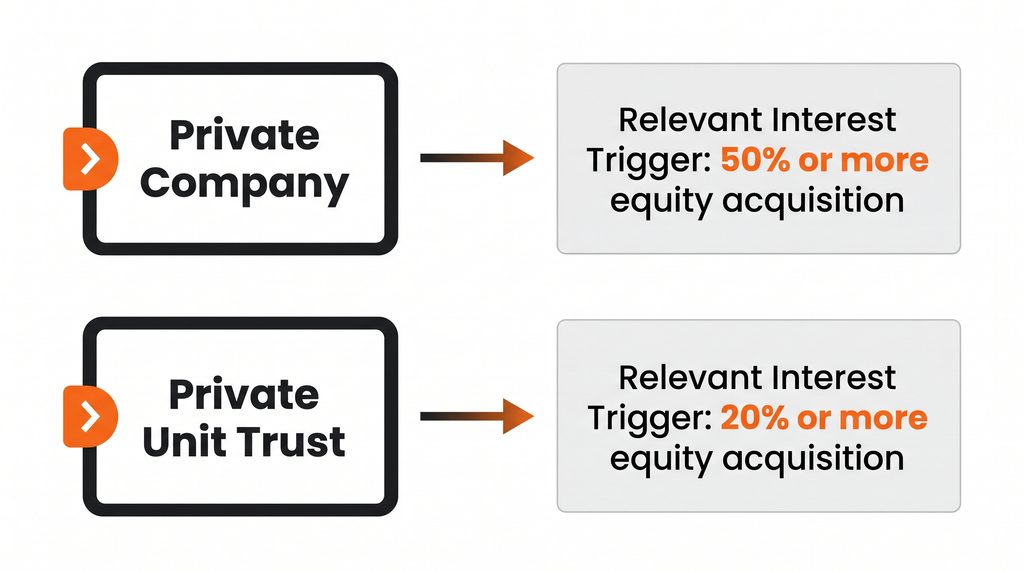
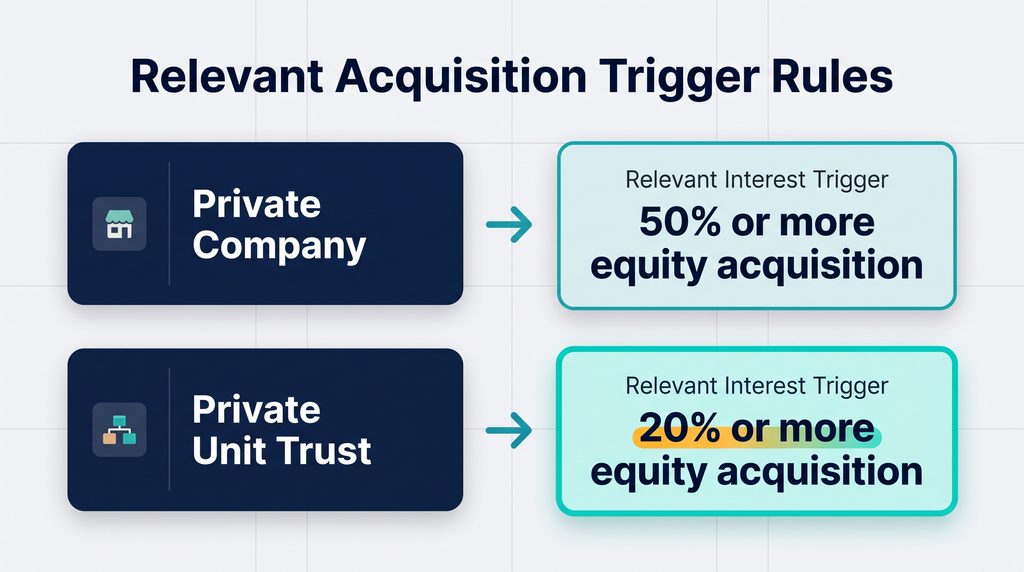
| Landholder duty threshold | 50% interest acquisition in private company | 20% interest acquisition in private trust |
| Lender acceptance | High / Standard commercial processing | High, provided Trust Deed contains full borrowing powers |
Landholder Duty: The Queensland Legal Trap
When planning property development structuring in QLD, you must account for Queensland’s statutory landholder duty regime administered by the Queensland Revenue Office (QRO).
Unlike transfer duty (which applies to direct land sales), landholder duty is triggered when an individual or entity acquires a “relevant interest” in a company or unit trust that owns land in Queensland with an unencumbered value of $2 million or more.
Why this trap catches developers unaware:
Because the trigger threshold for a private unit trust is just 20%, bringing a new investor into a unit trust that holds a $3 million Brisbane development site can trigger full landholder duty on the underlying land value. If the transaction is structured incorrectly, the QRO will assess duty on the total market value of the property, not just the capital contributed by the new unitholder.
Before restructuring units, issuing new equity classes or executing option agreements over trust assets, consult qualified unit trust lawyers in Brisbane to model duty risks.
Which structure suits your development strategy?
To help determine the right entity for your upcoming project, review these standard commercial profiles:
Scenario A: The solo developer (Build-and-Sell)
- Project type: Single townhouse build or small residential split in Moreton Bay, returning quick trading income.
- Recommended vehicle: Private company (Pty Ltd) or Single Discretionary Trust.
- Rationale: Simple governance, low administrative overhead, and capped corporate tax rates on short-term trading revenue.
Scenario B: Multi-partner joint venture (Arm’s-length capital)
- Project type: A $12 million mixed-use apartment project in South Brisbane funded by two active developers and four passive high-net-worth investors.
- Recommended vehicle: Unit Trust with corporate trustee + bespoke unitholder agreement.
- Rationale: Fixed unitholdings provide absolute capital clarity, profits flow cleanly to investors’ personal entities, and individual CGT discounts are preserved.
Scenario C: Long-term commercial land banking
- Project type: Industrial site in Ipswich acquired for long-term holding, leasing, and future re-zoning over 7–10 years.
- Recommended vehicle: Hybrid trust or dual-company holding structure.
- Rationale: Balances annual Queensland land tax thresholds against long-term capital gains tax discount preservation upon eventual sale.
5 critical structuring mistakes to avoid
- Executing land contracts in the wrong entity name: Signing a contract as “John Smith and/or Nominee” without a structured option or trust setup can trigger double transfer duty in Queensland.
- Relying on generic, cheap online trust deeds: Generic deeds frequently lack essential property development clauses, such as forced unitholder capital calls, default interest provisions or emergency trustee borrowing powers.
- Ignoring unitholder agreements: A trust deed governs the trust, but a Unitholder Agreement regulates the commercial relationship between partners. Operating without a unitholder agreement leaves you defenseless during partner deadlocks.
- Forgetting landholder duty thresholds when raising capital: Allotting or transferring more than 20% of units in a property-holding unit trust without prior legal review can result in major unexpected QRO tax assessments.
- Failing to consult your acountant early: Legal structures must align perfectly with tax accounting models. We work directly with your tax adviser to ensure seamless operational integration.
Secure your project’s financial future with RA Law Group
Structuring a property development in Queensland requires balancing corporate governance, risk allocation and statutory tax obligations. At RA Law Group, our commercial advisory team delivers direct, plain-English counsel designed to protect your capital and maximise project returns.
General information disclaimer
This publication by RA Law Group is intended as general legal information only and does not constitute legal, financial or tax advice. Readers should not act upon this information without seeking formal legal counsel tailored to their specific property transaction and commercial circumstances.